


What is a runflat tyre? Essential facts and features
Knowing exactly how a runflat tyre operates is important for getting the most out of your vehicle's dynamics. This comprehensive guide breaks down the core differences between runflat and standard tyres, analysing their impact on safety, performance, overall cost, and maintenance.
What is a runflat tyre?
Runflat tyres (also known as run flat tyres or run-on-flat tyres) are designed to allow a vehicle to continue driving safely for a limited distance, and at a limited speed, even after experiencing a puncture or a loss of air pressure. Unlike standard tyres, which normally deflate rapidly once punctured, a runflat features a reinforced sidewall construction, preventing the tyre from collapsing completely.
How do I recognise a runflat tyre?
Before inspecting the tyres themselves, one of the easiest ways to tell if your car is fitted with runflat tyres is to look under the boot floor, as vehicles equipped with runflat technology generally do not come with a traditional spare wheel. Beyond this quick check, you can verify the tyres directly by checking their markings or physical structure.
Tyre Markings
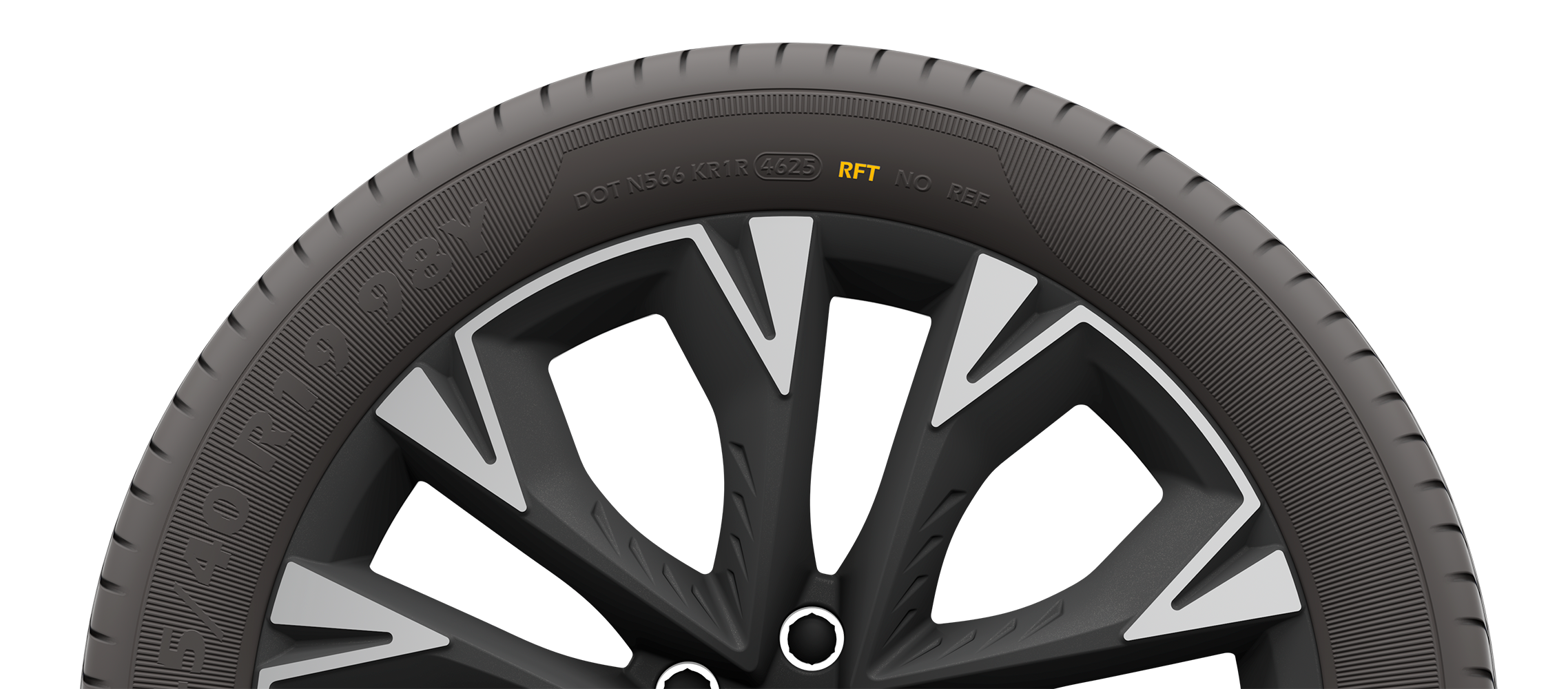
The easiest way you can recognise a runflat tyre is by inspecting the sidewall for specific markings, such as:
RFT (Run Flat Technology)
RSC (Run Flat System Component)
ROF (Run on Flat)
SSR (Self-Supporting Runflat)
ZP (Zero Pressure)
The runflat tyre symbol provides peace of mind that you can drive a short distance to a car service and repair centre even with zero air pressure.
Physical Inspection
Another way you can recognise a runflat is by physically inspecting it. Because the sidewall is designed to carry the car's full weight even when completely deflated, it feels significantly thicker, heavier, and far more rigid than a traditional alternative.
How do runflat tyres work?
The mechanics of a runflat tyre rely entirely on its reinforced sidewalls. When a loss of pressure occurs, its rigid internal structures take over to support the vehicle's weight, allowing the vehicle to continue running safely.
Because these tyres are engineered to maintain their shape even when completely flat, it can be difficult for a driver to physically feel a loss of pressure. For this reason, any vehicle equipped with runflat tyres must incorporate a Tyre Pressure Monitoring System (TPMS). The TPMS acts as a vital digital safeguard, reporting real-time tyre pressure information to the driver. Without this warning, you could unknowingly continue your journey on a compromised tyre, risking severe, hidden damage to its internal structure.
What are the benefits of a runflat tyre?
The primary advantage of a runflat tyre is that it allows you to continue driving with a puncture for up to 80 km, at a maximum speed of 80 km/h, thanks to its specially reinforced sidewalls.
In the event of a blowout, the stiff internal structure keeps your car stable and prevents the tyre from separating from the wheel. This means you can avoid a dangerous roadside wheel change and safely continue your journey until you reach a service centre (although it is imperative to replace the tyre as soon as possible).
Furthermore, because you do not need to carry a heavy spare wheel and tools, this setup frees up extra space in your boot and reduces the vehicle’s overall weight.
What should I do in case of pressure loss?
In the event of pressure loss with a runflat tyre, you can continue driving until you find a safe location or a tyre repair shop. However, you must strictly follow limitations on speed and distance. This is crucial to avoid potential damage to the rim or losing control of your vehicle.
Should your runflat tyre lose pressure, follow these steps:
- Reduce Speed Immediately: Slow down safely and don´t exceed 80 km/h (or the limit indicated in your owner's manual).
- Limit Distance: When your TPMS detects a pressure drop, it will instantly display a warning on your dashboard. From the point of the puncture, you can usually drive for a maximum of 80 km. Because this limit can vary, always check your vehicle's manual or the tyre manufacturer's guidelines to confirm the exact safe operating distance.
- Seek Expert Assistance: Head to the nearest repair centre for a professional inspection or replacement of your runflat tyre.
How far can I drive on runflat tyres with a puncture?
Runflat tyres normally allow you to drive for up to 80 km. However, we strongly advise stopping in a secure location as soon as possible to ensure the safety of everyone on board. To determine the exact maximum distance your specific runflat tyres can safely travel, always check your owner's manual, the tyre manufacturer, or a certified professional.
Can I repair a runflat tyre?
Unlike conventional tyres, a damaged runflat typically cannot be safely repaired. Its rigid, reinforced design makes it extremely difficult to detect internal structural damage that may have occurred while driving without air. For your safety, we recommend replacing the tyre entirely as soon as possible.
Can I change runflat tyres with standard tyres?
Yes, you can replace your runflat tyres with conventional ones. Make sure to consult your owner's manual and check whether the desired new tyres meet your vehicle's specifications.
Run-Flat vs. Standard Tyres
When comparing runflat technology to a conventional tyre setup, standard tyres offer advantages in both comfort and long-term maintenance. Without the rigid internal structure, standard tyres absorb bumps and road vibration much more effectively, offering a quieter, smoother ride and improved fuel efficiency.
Moreover, standard tyres are widely accessible, considerably less expensive compared to runflat, and can often be safely repaired after a puncture, making them a more budget-friendly option for many drivers. In case you wish to change from runflat to standard tyres, keep in mind that you will need to carry a spare tyre or a puncture repair kit in your boot.
Can I combine runflats with standard tyres?
It is strictly not recommended to mix run flat with regular tyres as it can have a negative impact on handling the vehicle. The strengthened sidewall could cause an imbalance in grip and steering response.
Is my car compatible with runflat tyres?
The sizes of the rims and tyres approved for your vehicle are listed in the vehicle documentation (e.g. EC Certificate of Conformity or COC document), and this may vary depending on the country of residence.
It is crucial to consult your owner's manual to see if your car permits the installation of runflat tyres. Because of their heavy, inflexible sidewalls, using them on an incompatible vehicle can negatively impact your safety on the road, as well as cause mechanical damage.
Furthermore, your car must be equipped with a Tyre Pressure Monitoring System (TPMS) to use runflat tyres. This digital alert is a mandatory safety requirement to warn you the moment a pressure loss occurs.
What tyres are approved for my CUPRA?
As a CUPRA owner, you must consult your preferred Service Partner to confirm whether wheels or tyres of a different size to those originally fitted can be safely used. Our experts can verify exactly which wheel and tyre combinations are permitted across your front and rear axles.
Looking for the ultimate tyre protection and assistance? At CUPRA, we keep you moving forward with confidence. From expert guidance based on your vehicle’s exact specifications to tyre maintenance services, we provide everything your car deserves:
Dedicated Storage: We safely store and swap your seasonal tyres, ensuring optimal performance, safety, and efficiency year-round.
Dedicated Care: Drive with total peace of mind, backed by up to 36 months of comprehensive insurance and puncture coverage.
Dedicated Assistance: Enjoy up to two years of on-site tyre replacement, covering original parts, expert labour, and dedicated customer support whenever you are on the road.
FAQs
What are the advantages of runflat tyres?
The major advantage of a runflat tyre is that it eliminates the need to change a tyre in dangerous locations, allowing you to keep driving until you reach a safe spot. Additionally, it frees up space in your car's boot, as a spare tyre is no longer required.
What are the disadvantages of runflat tyres?
Because of their stiffer sidewalls, runflat tyres often deliver a firmer, less comfortable ride and lower fuel efficiency. Furthermore, they come with higher replacement costs and are generally more difficult to repair or replace.
How do I know if a tyre is runflat?
To identify a runflat or run flat tyre, you can look for certain markings or labels on the tyre sidewall. Manufacturers typically use codes such as RFT (Run Flat Technology), RSC (Run Flat System Component), ROF (Run On Flat), SSR (Self-Supporting Runflat), ZP (Zero Pressure), or similar abbreviations to indicate this technology.
What is TPMS?
The Tyre Pressure Monitoring System (TPMS) is an electronic safety feature designed to warn you if one or more of your tyres become under-inflated, which could lead to unsafe driving conditions.
Are runflat tyres more expensive than standard tyres?
Yes, runflat tyres are generally more expensive than standard ones.
Where can I find my vehicle's tyre specifications?
The most reliable way to check which type of tyres your vehicle is approved to use is to consult your owner's manual. It will provide the exact tyre specifications approved to ensure optimal safety and performance.